Dieser Beitrag ist auch verfügbar auf:
Suunto is known for sports watches — rugged devices for the mountain or the marathon. That the Finns now want to move into your ears comes as a surprise at first. But the Spark isn’t an ordinary sports headphone; it’s an open-ear device with genuine athlete DNA: head-gesture controls, neck-mobility measurement, and a metronome. Whether it’s as convincing in practice as on paper… more on that shortly.
Advertisement: The manufacturer provided me with the product for this review at my own request. This had no influence on the content of my review. The article is written freely and reflects exclusively my personal experiences.
The Suunto Spark is an open-ear sports headphone for 149 euros, with head-gesture controls, neck-mobility measurement, and voice playback from the Suunto watch — a feature set that hasn’t existed in this price class before. Fit and wearing comfort are simply excellent, and the sound is solid. Anyone who wants to listen to music or podcasts while running without shutting out their surroundings will find a strong package here at a fair price.
Suunto Spark: Technical Specs at a Glance
| Form factor | Open-ear with ear hooks (memory titanium, silicone-coated) |
| Weight | 9 g per side (18 g total) |
| Drivers | Hybrid open-ear multi-driver system |
| Codecs | LHDC 5.0 (up to 96 kHz), AAC, SBC |
| Bluetooth | 5.4 |
| Multipoint | Yes (2 devices simultaneously) |
| Microphones | 2 × ENC (Environmental Noise Cancellation) |
| Battery (headphones) | up to 7 hours |
| Battery (with case) | up to 36 hours total |
| Charging time | Headphones ≤ 60 min / case ≤ 100 min |
| Water resistance | IP55 (sweat and splash resistance) |
| Charging port | USB-C |
| Controls | Touch button (configurable) + head-gesture controls |
| Sport features | Metronome (120–200 BPM / 10-BPM steps), neck-mobility assessment, sport mode (app — function not documented) |
| Suunto watch integration | Yes — voice updates for pace, heart rate, distance, laps |
| Price | 149 euros |
First Impression
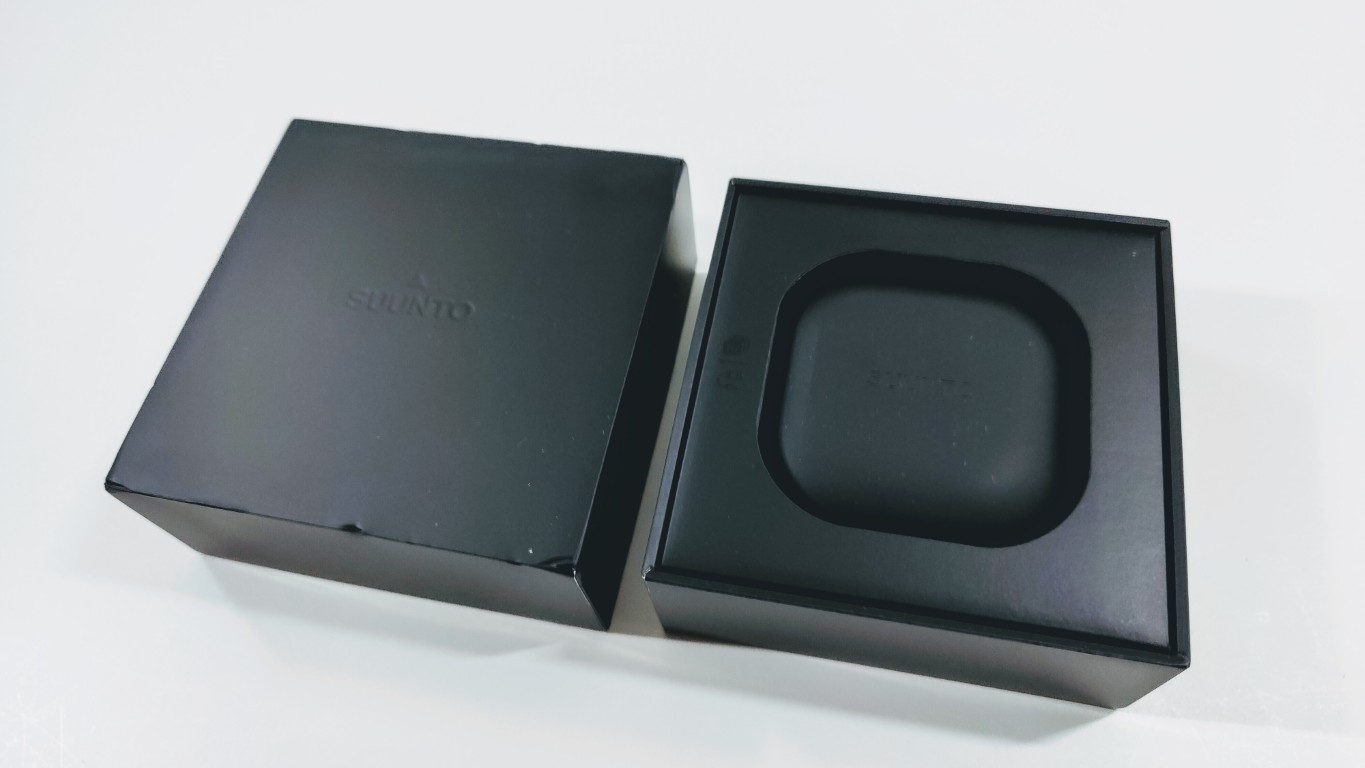

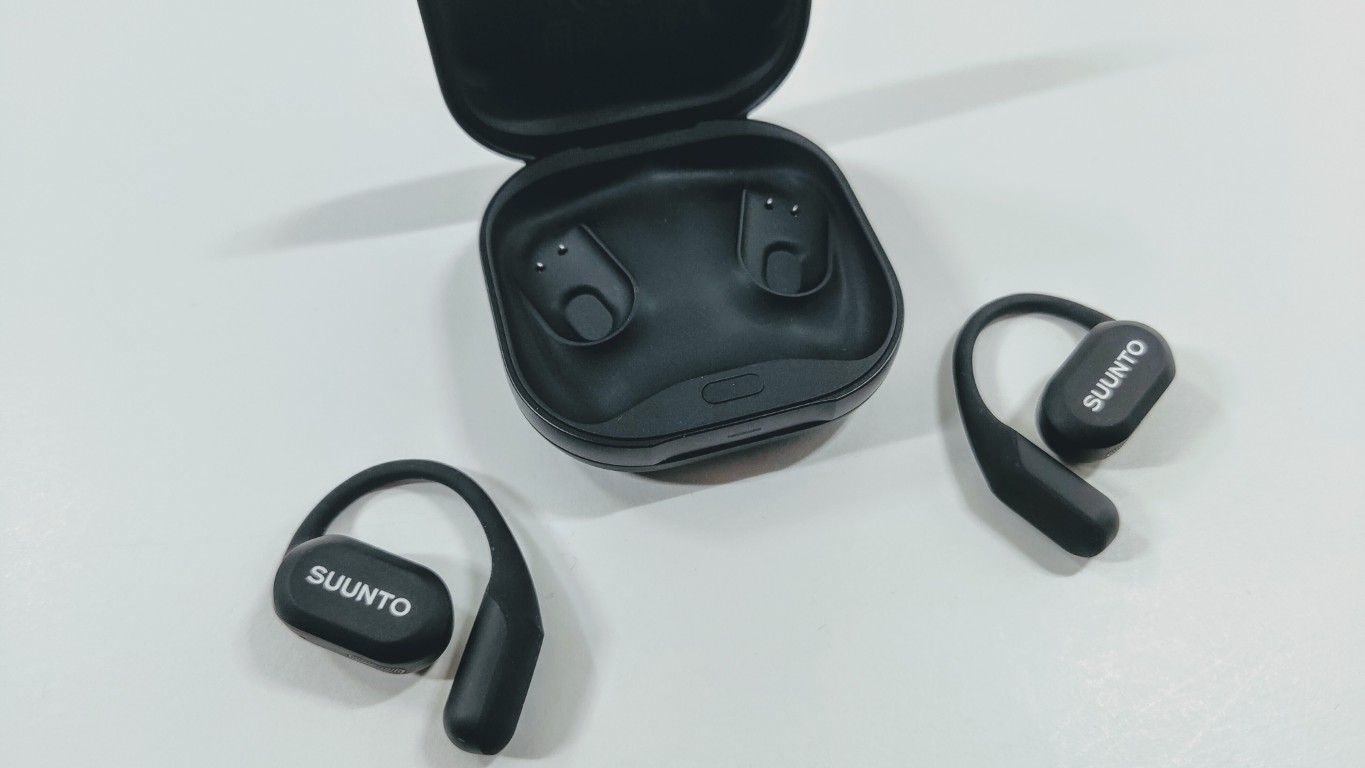
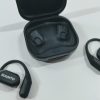
Nine grams per side — you notice it immediately. The Spark sit almost weightlessly on your ears, and the silicone-coated memory-titanium hooks conform snugly to the contour of the ear. The charging case is compact, and the build quality feels premium. Nothing here screams “gadget experiment” — this is a well-thought-out product from a manufacturer that knows about body contact from its sports-watch business.
Fit: The Best Thing About the Spark
The ear-hook form factor is the most consistent design decision in the entire device — and it pays off. In running tests the headphone always stays put, at any pace, on any surface. No readjusting, no slipping, no consciously thinking about the fit. With sports headphones, sadly, that’s anything but a given. :)
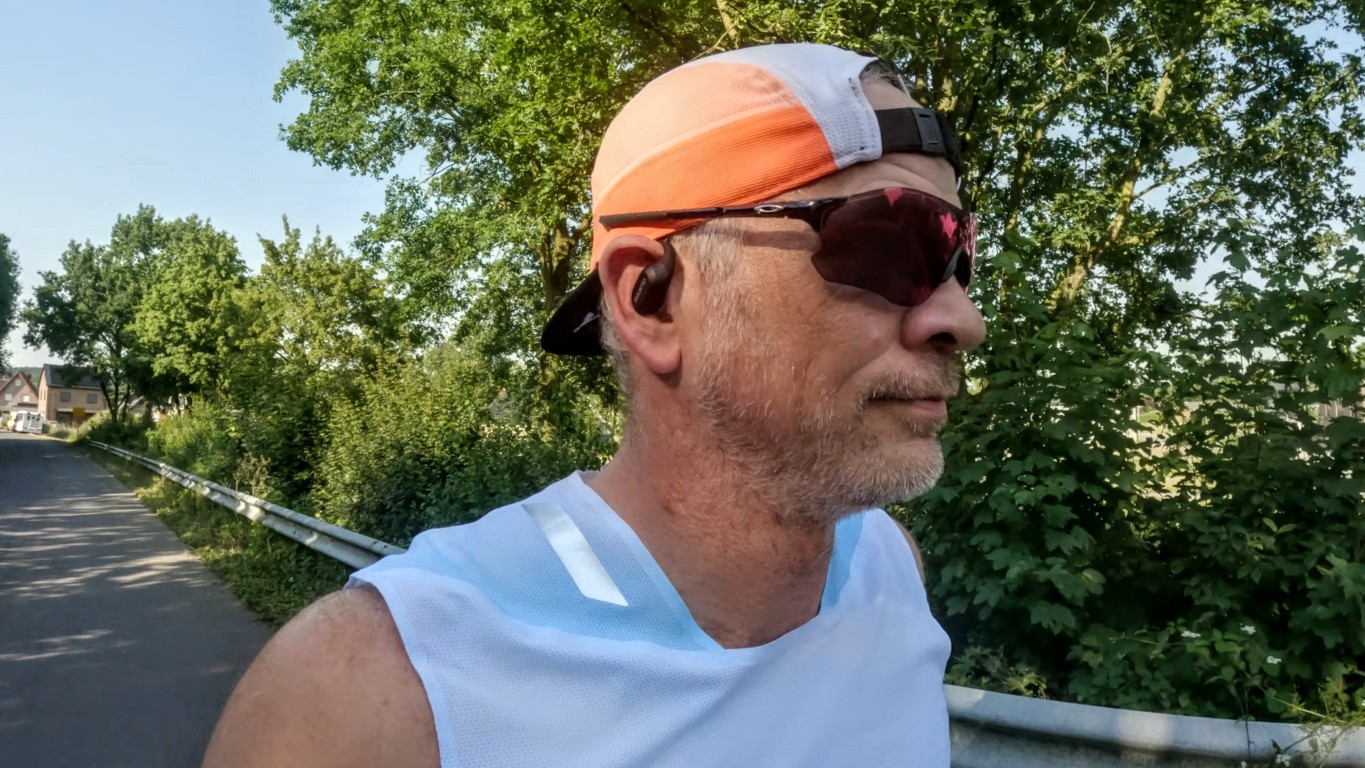
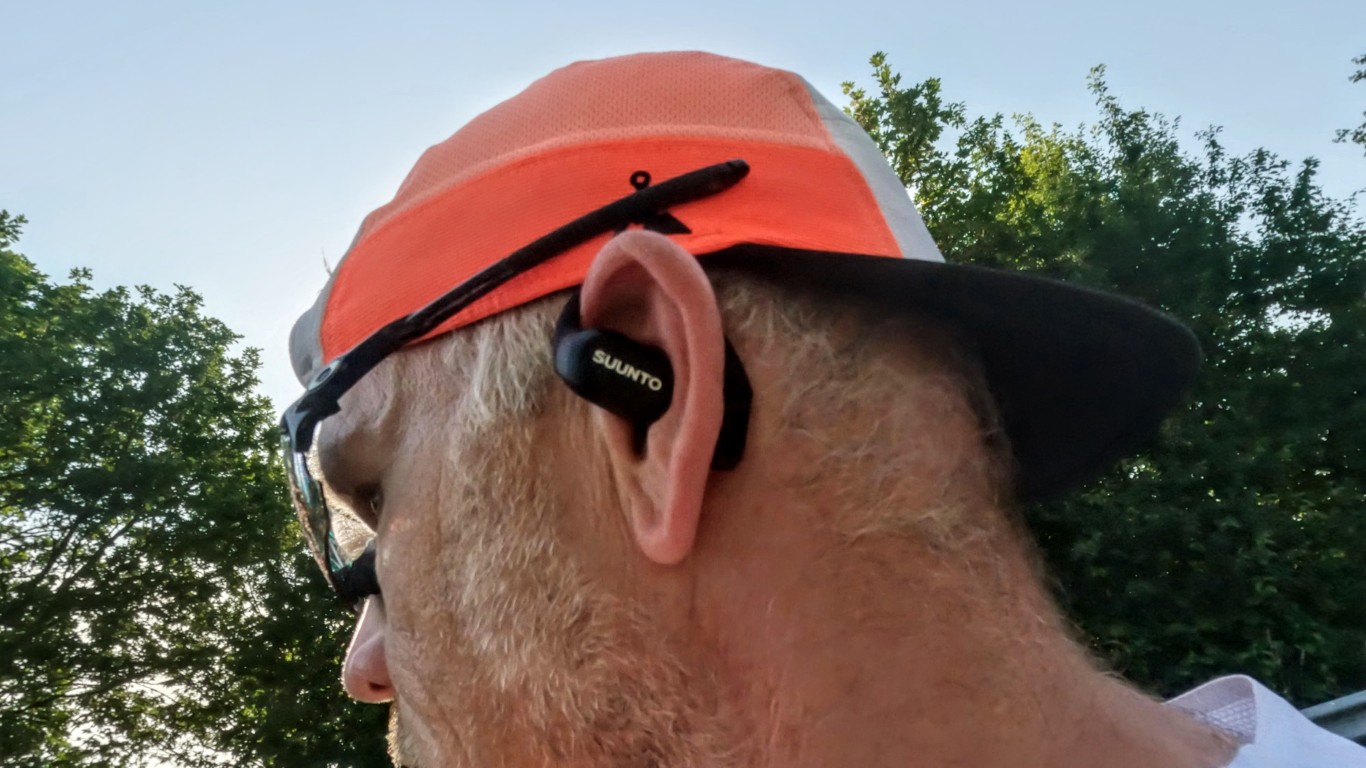
Even after longer sessions the wearing comfort stays good — no pressure, no sweat issues. Anyone who has sensitive ears and therefore avoids in-ears will appreciate the Spark’s form factor. And one detail you can barely see in the product photos: the Spark can also be worn under a bike helmet, a cap, or even a beanie.
Sound: Good — But Not Without Caveats
By design, open-ear headphones fight against physics: part of the sound is lost to the surroundings, the bass feels more open, and ambient noise masks fine details. That’s not a Suunto problem; that’s the principle. Within these limits the Spark does its job well — LHDC 5.0 at up to 96 kHz delivers technically more than most competitors, and the multi-driver system works more clearly than expected.
In a direct comparison with a closed in-ear, the difference is noticeable — that’s normal. With continued use, though, you quickly get used to the sound profile and come to perceive it as perfectly normal. :) What is not normal, however: the product page advertises four EQ presets (Legendary, Bass Boost, Treble Boost, Vocal Boost) plus a custom sound profile. In the Suunto app itself, there’s no sign of any of this — the only audio option is “Spatial audio” on or off. This is either an app update that’s still pending or simply misleading product communication.
Sport Features: Running Form, Metronome, and Head Gestures
On paper, this is where the Spark clearly sets itself apart from the competition — in practice, the picture is more nuanced. The product page advertises features like cadence, ground contact time, and vertical oscillation in real time. None of this appears in the user manual, and even in combination with the Suunto Vertical 2 these metrics can’t be retrieved in any verifiable way. There is a sport mode in the Suunto app that you can start — but what gets measured or calculated is described neither in the app nor in the manual. That’s no small thing: features that are prominently advertised should also be documented and usable.
The head-gesture control is one of the more unobtrusive features — and yet practical. Nodding twice answers calls; shaking your head twice skips the track or rejects calls. When running with gloves, or simply in full stride, this is more convenient than tapping on the headphone.
The metronome is a good idea with an annoying implementation. The step frequency can only be set in steps of 10: 120, 130, 140 … up to 200 BPM. Anyone who wants to deliberately raise their cadence from 162 to 168 steps per minute — a completely realistic goal in running-form work — is out of luck. ;) Precise cadence work needs single-BPM steps. So the metronome remains a rough orientation tool, nothing more.
Neck Mobility: What’s Behind It?
The neck-mobility assessment is one of the most unusual features on the Spark — and surprisingly well thought out. The IMU sensors in the headphones capture the rotations and tilts of your head: following the audio instructions, you move your neck as far as is possible without pain — left, right, up, down. The result is an assessment of your range of motion that can be tracked over time.
On top of that comes a neck-fatigue warning: anyone who wears the headphones in everyday life and stays in a rigid posture for too long gets a prompt. For runners who sit at a desk a lot and know that neck tension affects running posture, this is a feature with real added value — even if the novelty phase eventually wears off. ;)
Open-Ear While Running: The Real Main Argument
All the sport features are exciting — but the decisive advantage of the Spark for everyday running is the open-ear principle itself. Listen to music, listen to podcasts, and still: notice cars, hear other runners, experience your surroundings. Once you’ve experienced this as the standard, you won’t want to go back to earplugs that swallow outside noise.
In a price comparison, the Spark at 149 euros comes in below the Shokz OpenFit 2 — while offering considerably more sport-specific functions. So anyone still looking for their first open-ear headphone, who knows they’ll mainly use it for sports, gets very good value for money here.
Pros
- Fit with ear hooks: always stays put, never slips — even at high speed and in the heat
- Open-ear principle: full awareness of your surroundings is retained, ideal for the road
- Head-gesture control works reliably — more practical than touch operation while running
- Neck-mobility measurement: innovative use of the IMU sensors with everyday relevance
- 36 hours of total runtime with the case — no charging needed for a week of training
- Value for money: cheaper than direct competitors with a greater range of sport features
Cons
- Metronome only in steps of 10 (120–200 BPM) — useless for precise cadence work
- Sport mode present in the app but not documented — what it measures remains unclear; the advertised running-form metrics (cadence, ground contact time, oscillation) were not usable for me in practice
- The advertised EQ with four presets can’t be found in the Suunto app — only “Spatial audio” on/off
- Audio quality is good but, in a direct comparison with closed in-ears, audibly limited (by design)
- The full feature set only unfolds with a Suunto watch — without the Suunto ecosystem, some features remain limited
Who Is the Suunto Spark the Right Choice For?
The Spark is made for runners who want to listen to music or podcasts during training without shutting out the outside world — and who are willing to accept sound compromises for it. It plays to its strengths especially when a Suunto watch is already in use: then the headphone becomes a hands-free command center for running-form data and voice feedback. Anyone who seriously wants to use a metronome for cadence work, or who expects the advertised EQ mode, should check the app before buying — here Suunto doesn’t yet deliver what the product page promises.
My Verdict:

Autor und Betreiber von Harlerunner.de. Läufer seit mehr als zehn Jahren, über 100 Wettkämpfe von 5 km bis Halbmarathon im Gepäck, bisher mehr als 500 Produkte getestet. Kein Labortest — alles kommt aus dem echten Training in und um Coesfeld. Was du hier liest, hat er selbst an den Füßen, am Körper, am Handgelenk oder im Ohr gehabt.
Author and owner of Harlerunner.de. A runner for over ten years, with more than 100 races under his belt – ranging from 5 km to half-marathons – and having tested over 500 products to date. No lab tests – everything is based on real-world training in and around Coesfeld. Everything you read here is something he has personally worn on his feet, on his body, on his wrist or in his ear.